Pakistan–Afghanistan Conflict: Can It Turn Into a War?
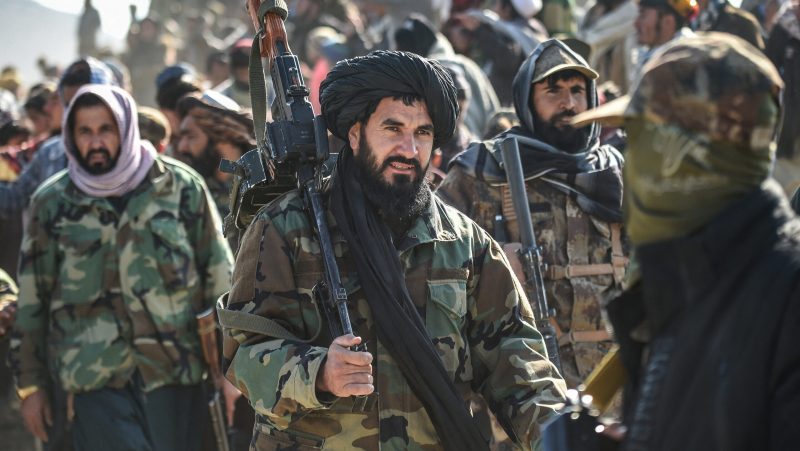
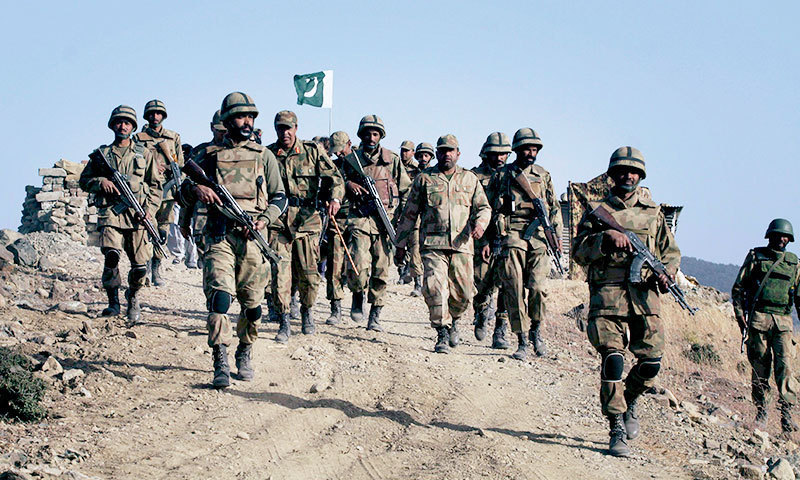
At this moment, one major news topic is being discussed around the world — the growing conflict between Pakistan and Afghanistan. The big question is whether this conflict can turn into a full-scale war. Pakistan has already described the situation as a war, but the United Nations has not officially recognized it as a war yet.
The world is already facing multiple conflicts. The war between Russia and Ukraine continues. Tensions between China and Taiwan remain high. The Israel–Gaza conflict is also ongoing. In such a situation, the sudden escalation between Pakistan and Afghanistan has raised many questions.
This conflict is not new. Its roots go back to history. During British rule in India, a border line was drawn in 1893 by British official Mortimer Durand. This line separated Afghanistan from British India and became known as the Durand Line. At that time, India and Pakistan were part of the same territory.
The Durand Line remains one of the biggest disputes between Afghanistan and Pakistan. After India gained independence in 1947 and Pakistan became a separate country, Pakistan accepted this border and tried to build fencing along it. However, Afghanistan never officially accepted the Durand Line. Afghanistan argued that the border was imposed during British rule and therefore it does not recognize it.
The Pashtun population lives on both sides of this border. When the Durand Line was drawn, the Pashtun community was divided into two parts — one part in Afghanistan and the other in Pakistan. Because of this division, tensions around the border have existed for decades.
Over time the situation has worsened, and by 2026 the tension has reached a level where the possibility of war is being discussed.
Some geopolitical analysts believe that international intelligence agencies may also have strategic interests in the region. It is often suggested that agencies like Britain’s MI6 and America’s CIA may benefit from maintaining instability in the region.
Recently the United States warned Iran that if its conditions were not met, it could face military action. Some analysts believe that if the United States attacks Iran, Pakistan’s intelligence agency ISI could indirectly support Iran.
Historically, Pakistan’s ISI has played a major role in international conflicts. In 1979, when the Soviet Union invaded Afghanistan, the United States launched Operation Cyclone to support Afghan fighters. During this period, the CIA provided financial and military support through Pakistan’s ISI to train and arm the Mujahideen.
These Mujahideen eventually forced the Soviet Red Army to retreat from Afghanistan. However, this does not necessarily mean that Pakistan has always been fully aligned with the United States. In 2011, Osama bin Laden was killed in Abbottabad, Pakistan, which raised many questions globally.
Several reports have also suggested links between the Haqqani Network and Pakistan’s intelligence system. This shows how complex the geopolitical situation in the region has been.
At the same time, China and Russia also have strategic interests in the region. Both countries are opposed to increasing American influence in Asia. China has signed a 25-year economic and energy agreement with Iran and relies on Iranian oil. Because of this, China would not want Iran to come fully under American control.
Russia is also considered a close partner of Iran and has provided military technology and support in the past. Some analysts believe that if the United States focuses its military resources on Iran, it could reduce pressure on Russia in the Ukraine war.
Iran’s situation is also part of the broader geopolitical tension. The United States pressured Iran to stop its nuclear program, and Iran agreed to limit its nuclear activities under international agreements. However, additional pressure was placed on Iran to stop developing missile technology as well.
Iran argues that it has the right to maintain defensive capabilities for its own security. According to Iran, agreeing to restrictions on nuclear weapons should not mean that it must completely give up its missile defense capabilities.
If a future conflict between the United States and Iran happens, it may not be a short conflict. Many countries could become involved, which could turn it into a long and complicated war.
Meanwhile, clashes between Pakistan and Afghanistan continue to occur along the border. Both countries frequently make different claims about casualties and military actions.
Such conflicts often continue for long periods without a clear resolution.
Wars also increase the demand for weapons, which benefits the global arms industry. However, the biggest losses in any conflict are suffered by ordinary civilians.
When neighboring countries fight, the effects are not limited to them alone. The instability can affect surrounding regions as well. Therefore, maintaining peace in the region is important for everyone.
War has never been a permanent solution to any problem. Dialogue, diplomacy, and peaceful negotiations remain the most effective ways to resolve international conflicts.
Understanding global events requires careful analysis, research, and responsible discussion before forming conclusions.
Share the post "Pakistan–Afghanistan Conflict: Can It Turn Into a War?"
Leave a Reply